















































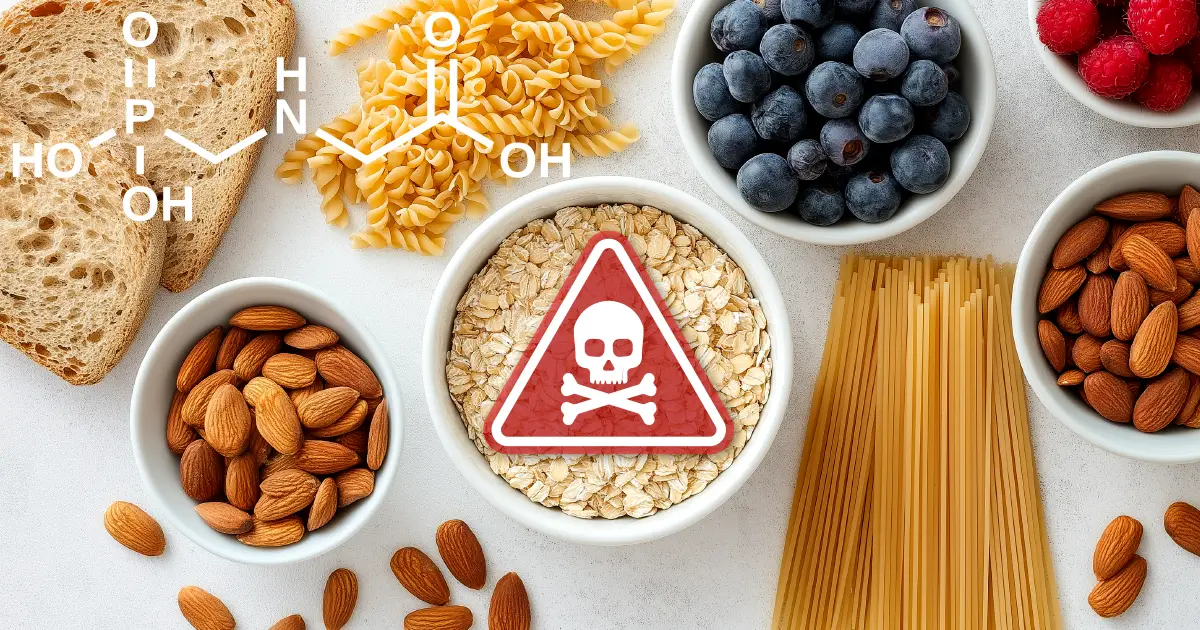
Scan the labels at the grocery store and you won't see it listed, making you think it's not there. But this tasteless, colorless toxin is hiding in countless foods that we eat every day. Before you know it, you're serving up toxins for breakfast, lunch and dinner. That hidden ingredient is glyphosate, a pesticide linked to a long list of health issues.
Glyphosate is also known as Roundup, a weedkiller linked to cancer, digestive disorders, and more. The International Agency for Research on Cancer (IARC) classified glyphosate as a "probable human carcinogen." Lawsuits linking Roundup to non-Hodgkin's Lymphoma have paid out large sums to victims, totaling over $11 billion and counting (1).
Despite safety concerns, major regulators still allow its widespread use. In fact, the Environmental Protection Agency (EPA) reports nearly 300 million pounds of glyphosate are sprayed in the US every year (2).
How Does Glyphosate End Up In Our Food?
Farmers use glyphosate on non-organic, or conventionally-grown foods. It's used as a weedkiller or to dry crops, allowing for an earlier harvest. Unfortunately, this means that glyphosate residue ends up directly in our food. This toxic chemical is sprayed on many common crops such as corn, soy, beans, nuts, and grains like oats and wheat.
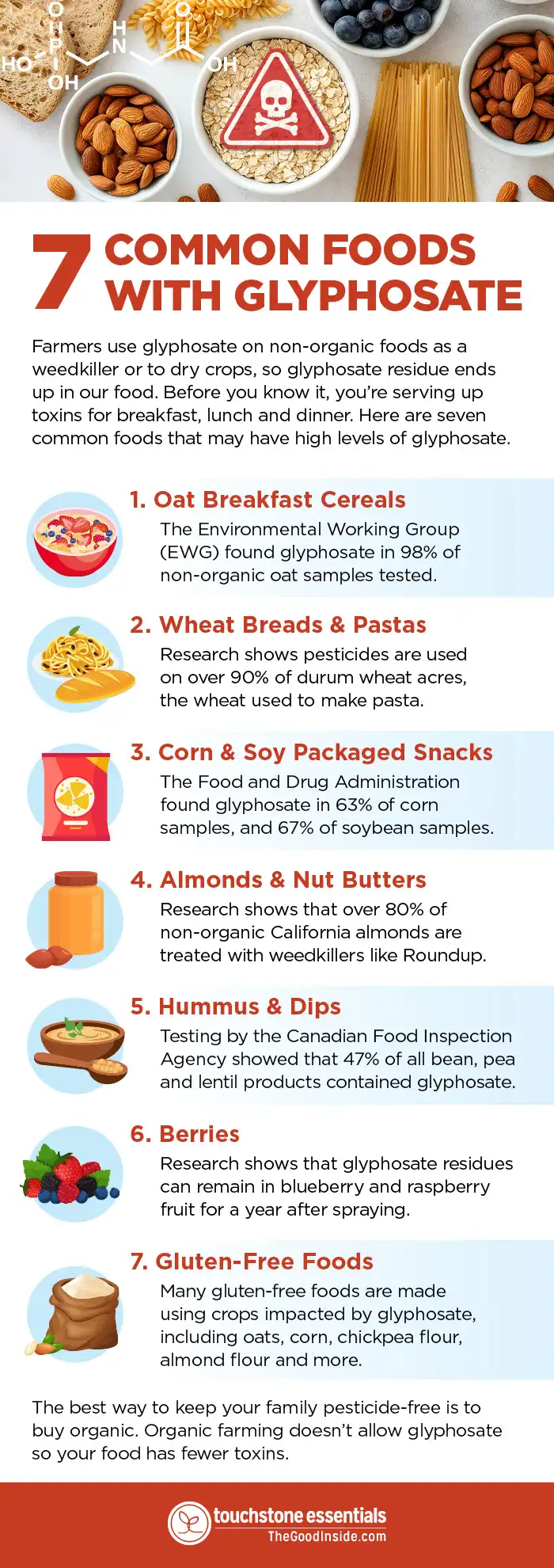
Though glyphosate is found in many items we buy at the store, there are some foods that are more likely to contain the pesticide than others. Here are seven common foods that may have high levels of glyphosate.
1. Oat Breakfast Cereals
Grains like oats are sprayed with glyphosate to speed up the drying of the crop before harvest. Oats are commonly used in breakfast foods, including oatmeal, cereals, granola and more.
Testing on oat-based foods confirms the presence of glyphosate in almost all cases. Researchers at the Environmental Working Group (EWG) found glyphosate in 98% of samples tested. They also found that in most cases, the level of exposure is high. Some 79% of the samples had glyphosate levels above 160 parts per billion (ppb), the safety level set by the EWG for children (3).
Sadly, popular children's breakfast items had some of the highest levels. Six varieties of Cheerios and Nature Valley granola bars tested as having over 800 ppb of glyphosate (4).
2. Wheat Breads & Pastas
As with oats, non-organic wheat is sprayed with glyphosate for faster and easier harvesting. Wheat is a staple that is the basis for many popular foods such as pastas, breads, bakery items, crackers, and more.
The use of glyphosate on wheat is widespread. Research shows pesticides are used on over 90% of durum wheat acres, which is the wheat used to make pasta. The National Agricultural Statistics Service also noted that almost 10 million pounds of glyphosate was applied to varieties of wheat grown in the U.S. in 2017 (5).
3. Corn & Soy Packaged Snacks
Soybeans and corn are the primary targets of glyphosate. In fact, genetically-modified soybeans and corn are engineered to survive applications of glyphosate. However, even non-GMO corn and soy are being sprayed with the weedkiller before harvesting.
Soy and corn are two staples found in countless processed foods. They are used as main ingredients in many snacks such as chips or puffs. But they are more often sprinkled in as food additives such as maltodextrin (corn) or lecithin (soy). That makes them ubiquitous in cookies, crackers, snack bars, candies, and chips.
How prevalent is this issue? The Food and Drug Administration released test results on the amount of glyphosate in foods in 2018. It found glyphosate in 63% of corn samples and in 67% of soybean samples (6).
4. Almonds & Nut Butters
It's not just cereal and grain crops that are impacted by glyphosate. Other popular plant-based foods like almonds are also tainted with glyphosate.
Over the last few decades, almonds have exploded in popularity. Almonds are packed with healthy fats and are used to create trail mixes, snack bars, flours, and plant-based milks. Glyphosate is frequently used as a weedkiller in non-organic almond orchards. That means many of these products can have pesticide residues.
Research shows that over 80% of non-organic California almonds are treated with weedkillers like Roundup. The Guardian reports that approximately 35 million pounds of pesticides per year are used on almonds (7).
5. Hummus & Dips
As with oats and wheat, chickpea crops are sprayed with glyphosate to dry them out for harvest. If the crops are wet when the glyphosate is applied, the beans absorb it, and the residue makes its way into your hummus.
It's a widespread issue. Testing by the Canadian Food Inspection Agency showed that 47% of all bean, pea and lentil products contained glyphosate. And 26 out of 71 samples tested showed levels exceeding Health Canada's "safe" limits (8).
6. Berries
Often listed as part of the EWG's Dirty Dozen, strawberry and blueberry crops are sprayed with glyphosate to eliminate weeds. The glyphosate also lands on the berries, where it can stay for a long time.
How long? Research shows that glyphosate residues can remain in blueberry and raspberry fruit for a year after spraying. The study also found that low levels of glyphosate residue could persist in plant shoots and root systems for years (9).
7. Gluten-Free Foods
Glyphosate is associated with an increased risk of gluten-intolerance and celiac disease, so it's important to avoid it if you have gluten issues (10). However, many gluten-free foods are made using crops impacted by glyphosate. That includes oats, corn, chickpea flour, almond flour and more. Even gluten-free favorites such as quinoa and millet can be sprayed with glyphosate.
Research on Glyphosate's Health Impacts
Glyphosate is extensively used in US agriculture. Yet research strongly suggests there are a number of concerning health impacts:
- Glyphosate can negatively affect the microbiome in the gut, which can impact the immune system (11).
- Cellular membranes can be disrupted by glyphosate (12).
- Glyphosate is associated with rising rates of gluten intolerance (13).
- Animal studies on mice correlated glyphosate exposure to anxiety and depressive-like behaviors (14).
- Glyphosate can cause neuroinflammation and oxidative stress in the central nervous system (15).
How to Reduce Glyphosate Exposure
Unfortunately, conventional foods are rife with herbicide and pesticide residues. That means a sprinkling of glyphosate with almost every meal.
The best way to keep your family pesticide-free is to buy organic. Organic farming methods ban the use of glyphosate so your food has fewer toxins. You can also buy products with "glyphosate residue free" labels since these foods have been tested for glyphosate.
Additionally, regular detoxing can also help the body rid itself of lingering toxins. Research shows that natural zeolite can bind to pesticides. Additionally, fulvic acid can bind to glyphosate in the GI tract, helping the body to eliminate it.
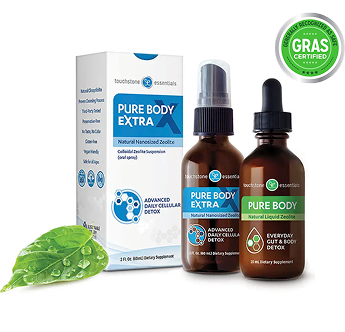
If you're dedicated to ridding yourself of toxic pesticides like glyphosate, consider adding Pure Body Extra for a natural zeolite detox, with Fulvic Minerals+ for a fulvic acid boost. For maximum benefits, use both in the Zeolite Fulvic Detox Pack for an optimal daily wellness routine. By eating organic, and detoxing the body, you'll significantly reduce your glyphosate exposure.
Recent Articles

11 Vitamins & Minerals Women Need

Hibiscus Mojito Detox Mocktail

7 Simple Ways to Enhance Your Detox

3 Big Ways Telomeres Impact Mitochondria
9 Foods to Stimulate GLP-1 Naturally
Use HSA/FSA for Your Favorite Detox Supplements
5 Dangers of Supplement Dupes

A Letter of Thanks From Our Founder

The Ultimate 2025 Holiday Gift Guide

9 Biohacking Tips for Longevity
Recent Articles
11 Vitamins & Minerals Women Need
Hibiscus Mojito Detox Mocktail
7 Simple Ways to Enhance Your Detox
3 Big Ways Telomeres Impact Mitochondria
9 Foods to Stimulate GLP-1 Naturally
Use HSA/FSA for Your Favorite Detox Supplements
A Letter of Thanks From Our Founder
The Ultimate 2025 Holiday Gift Guide
9 Biohacking Tips for Longevity


